
Having a pool is one of the best ways to enjoy the outdoors during warm weather. It’s your go-to spot for relaxing afternoons, family fun, or getting some low-impact exercise. But the benefits of owning a pool come with one unavoidable responsibility: maintenance.
Without regular upkeep, a beautiful pool can quickly turn into a source of stress. One of the most common issues pool owners face is algae. Weekly pool cleaning is one of the best ways to prevent pool algae before it even begins. It keeps your water clean, clear, and comfortable, while also protecting your equipment and saving you time and money in the long run.
Understanding Algae Growth in Pools
Algae are tiny plant-like organisms that thrive in water, and they multiply fast under the right conditions. If they’re not stopped early, they’ll take over your pool, turning your water green and coating surfaces with stubborn, slimy buildup.
Several factors create favorable conditions for algae growth:
– Sunlight and warm temperatures
– Stagnant water or poor circulation
– Low sanitizer levels or unbalanced chemicals
– Dirt and organic debris like leaves or insects
Even missing just a couple of cleanings or putting off testing the water can shift things out of balance. Once algae gain a foothold, they settle into corners, climb walls, and clog filters. Not only does this make your pool uninviting, but it also impacts the health of everyone using it and puts extra strain on your filtration system.
The Benefits of Weekly Pool Cleaning
Cleaning your pool weekly does more than just keep it looking good. It’s one of the simplest ways to prevent pool algae, because it removes the conditions algae need to grow.
When organic matter like leaves and bugs are left untouched, they start to decompose. That process releases nutrients that algae feed on. If chemical levels are off, even slightly, it becomes a perfect environment for spores to spread. Regular cleaning disrupts this cycle and keeps everything in check.
Here’s how a weekly cleaning schedule helps:
– Removes debris before it breaks down and feeds algae
– Maintains proper sanitizer and pH levels
– Helps keep circulation systems working efficiently
– Prevents algae from taking hold in corners or textured surfaces
– Reduces the need for stronger corrective treatments down the line
It’s not just about peace of mind. Preventive care helps extend the life of your pool’s equipment and surface finishes, which can save you from large repair bills later on.
What Does Weekly Pool Cleaning Involve?
A thorough weekly pool cleaning isn’t just skimming the surface. It covers a full checklist of tasks that keep your pool balanced, clean, and functioning properly.
Standard weekly pool cleaning usually includes:
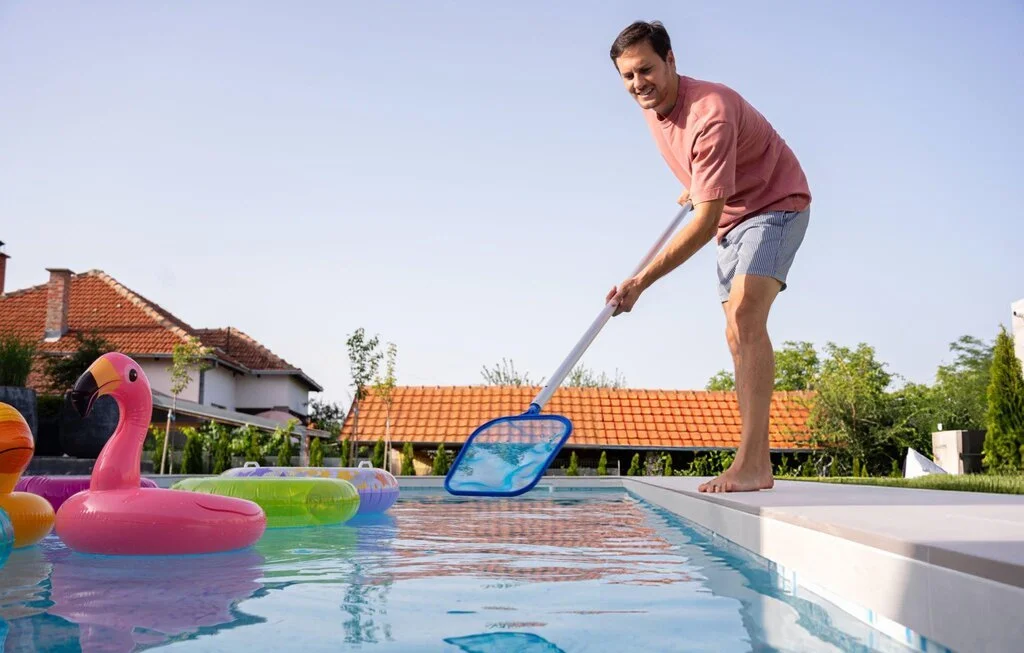
– Skimming floating leaves, insects, and debris from the surface
– Brushing steps, walls, and hard-to-reach areas where algae can hide
– Vacuuming the pool floor to remove buildup and dirt
– Checking and emptying skimmer and pump baskets
– Backwashing or cleaning the filter if needed
– Testing the water and adjusting chemicals to achieve the correct balance
– Checking equipment such as pumps, filters, and heaters for proper operation
Skipping even one of these tasks regularly can lead to early signs of algae. For example, a few weeks of ignoring wall brushing can quickly lead to green streaks in hard-to-see corners. Weekly attention keeps all parts of the pool operating efficiently and helps catch small issues before they become major annoyances.
Additional Tips for Algae Prevention
Even with professional weekly cleaning in place, there are a few simple things you can do on your own to prevent pool algae between services.
Here are some actions that help:
– Use a quality pool cover to reduce exposure to sunlight and falling debris
– Check that your pump and filter are running long enough each day for full circulation
– After parties or extra swimmers, give the pool a quick vacuum or shock treatment
– Keep trees and shrubs trimmed back to minimize leaf drop
– Monitor the water for cloudiness or unusual coloring
One common example that many pool owners face is returning from vacation to find cloudy, green water. It only takes a few days of inactivity — especially in hot weather — for algae to take over. Consistent weekly service helps prevent pool algae, even when you’re not around.
Understanding Why Pools Turn Green
When pool water turns green, it’s usually caused by algae. Algae are tiny organisms that grow quickly under the right conditions. All they need is a combination of sunlight, warm temperatures, and unbalanced water chemistry. Add in low chlorine or poor circulation, and they’ll multiply even faster.
Here are some of the most common reasons pool water turns green:
– Low chlorine levels
– Poor water circulation or filtration
– Skipping regular cleaning
– Hot, sunny weather with no shade
– Debris like leaves, grass, or dirt sitting in the water
– pH levels that are too high or too low
Let’s say you forget to add chlorine one weekend, and then it rains the next day. That storm washes in dirt and leaves, and now your water’s a little cloudier than usual. Maybe your pool pump didn’t run enough either. In just a few days, green water can show up and make it harder to get everything back to normal.
Even clear-looking water isn’t always safe. Early algae growth can start in places you don’t check often, like behind ladders or under steps. That’s why it’s so important to stay on top of maintenance before problems begin.
Regular Pool Maintenance
The best way to prevent pool algae and green water is to build a regular maintenance routine. Cleaning consistently not only keeps the water looking better but also stops algae from ever getting started.
Here’s what a basic weekly maintenance routine might look like:
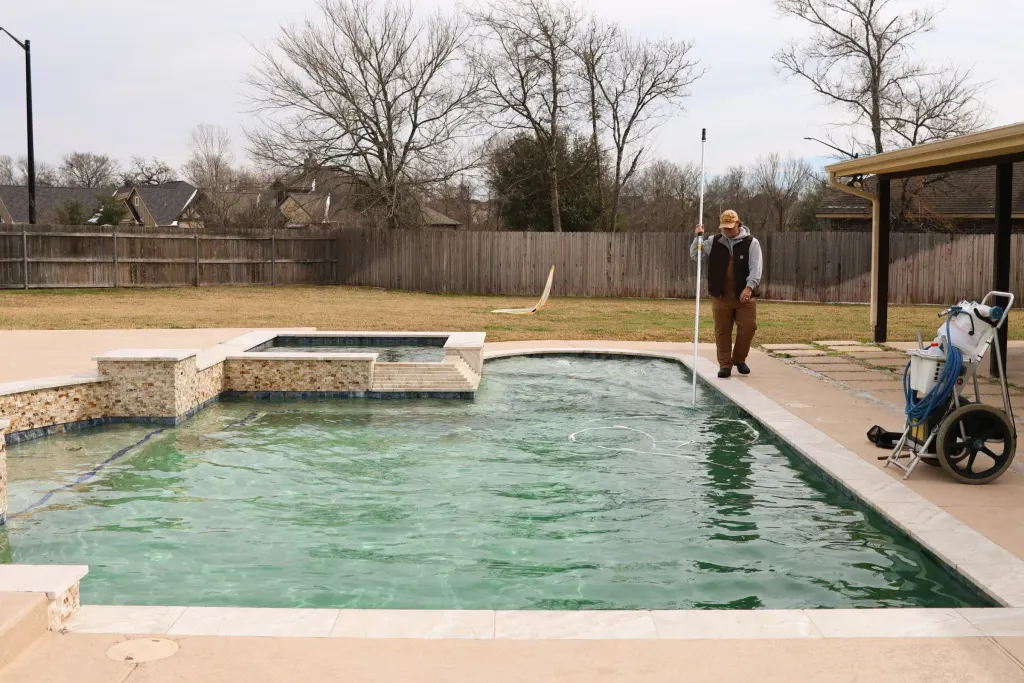
1. Skim the surface to remove leaves and floating debris.
2. Vacuum the pool floor to collect settled dirt and grime.
3. Brush the walls, steps, and corners to loosen any buildup.
4. Empty the skimmer and pump baskets.
5. Run the filtration system every day for at least 8 to 12 hours.
6. Test chlorine and pH levels and make adjustments as needed.
Brushing may seem like a minor chore, but it can break up hidden algae. Pay attention to areas that don’t get great water flow, such as corners and behind ladders. These are common places for algae to begin forming.
Vacuuming once or twice a week also helps prevent pool algae by keeping the floor clean. Debris sitting at the bottom turns into a food source for growth. Think of it like crumbs on a kitchen floor—they’re always going to attract something if left alone.
When you stick to a routine, you don’t just respond to problems, you stop them from showing up in the first place. That sets you up for better water chemistry and less work overall.
Stop Green Pool Disasters Before They Start
A green pool can sneak up on you fast in Conroe. One week the water looks a little dull, then almost overnight it is cloudy, then green, and nobody wants to swim in it. Warm weather, family gatherings, and holiday break plans can all get spoiled by a pool that suddenly looks like a pond.
Our humid climate makes this much more common. High humidity, warm water, and frequent rain feed algae and knock your pool water out of balance. When that happens, the water can turn in a hurry and simple fixes do not always work.
We want to help you stay ahead of those problems so you are not stuck with a green pool emergency right when everyone is ready to swim. With the right habits and smart care, you can prevent pool algae and keep your water clear instead of scrambling for a last-minute green-pool cleanup in Conroe.
Why Conroe’s Humid Climate Fuels Green Pools
Conroe is a great place for pools, but it is also a great place for algae. Warm air and warm water let algae grow almost all year. When the days get longer and the sun is stronger, the sun hits that water even more, and algae really takes off.
Humidity makes things worse. When the air is heavy and still, pool water does not cool or freshen as much. That warm, still water is perfect for algae to spread on walls, steps, and in corners.
Our rain patterns also play a big part. Heavy showers can:
Dilute chlorine so it cannot control algae
Change pH and alkalinity so your water goes out of balance
Wash dirt, grass, and other organics into the pool
All of that gives algae more food to grow.
Conroe neighborhoods often have big shade trees, thick landscaping, and plenty of pollen. That means your pool can collect:
Leaves, twigs, and acorns
Pollen dust on the surface
Soil and mulch from landscaping runoff
When this organic material sits in the pool, it breaks down and feeds algae. That is why a pool here can go from “slightly off” to “deep green” faster than many people expect.
How to Prevent Pool Algae All Year Round
It’s much easier to prevent pool algae than to battle it after it shows up. Weekly pool cleaning works as your constant defense line, keeping conditions healthy and the water crystal clear. Cleanings remove what algae feed on, protect delicate equipment, and make sure every swim is safe and enjoyable.
Building a habit of routine maintenance means fewer surprises, less time troubleshooting, and more time enjoying your pool. Whether it’s the peak of summer or a mild winter day in Texas, weekly upkeep helps make the most out of your pool year-round. With consistent treatment and a few smart habits, algae won’t stand a chance.
To keep your water clear, your pool equipment protected, and your weekends worry-free, make sure your pool cleaning is scheduled weekly. True Light Pools offers consistent service that helps maintain year-round cleanliness and stops algae before it spreads.