
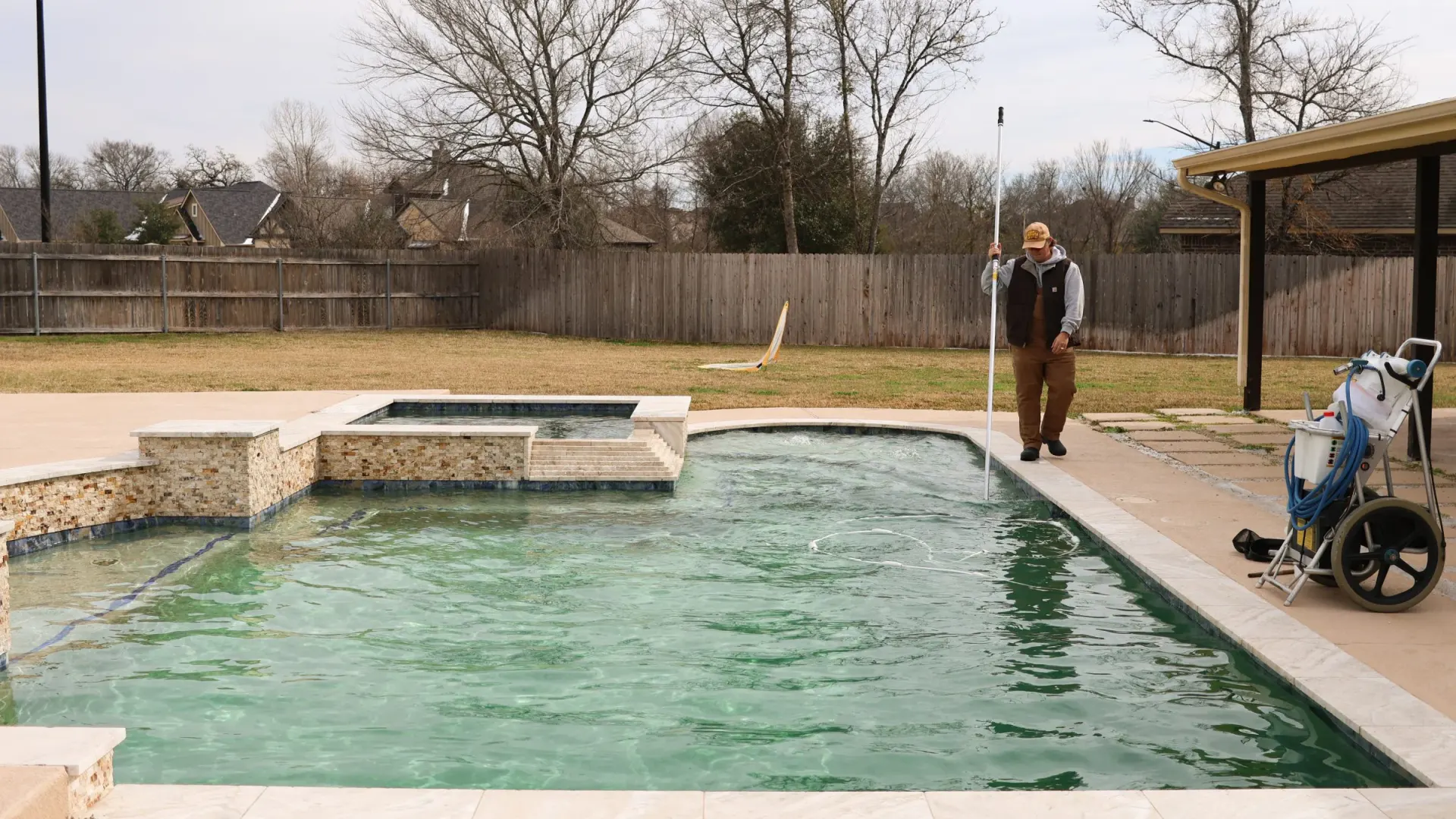
Opening your backyard to the sight of a green pool can be frustrating and, honestly, a little gross. That strange green color usually means algae is taking over. With the right steps and a bit of persistence, you can clear a green pool and bring it back to its clean, clear glory.
The first step when you set out to clear a green pool is identifying the cause. Algae blooms typically occur because of poor circulation, inadequate chlorine levels, or neglected maintenance. Heavy rains, high heat, or a broken pool pump can also create a perfect environment for algae to thrive.
Steps to Clear a Green Pool:
Test and Balance the Water: Before anything else, test your pool water for pH, chlorine, and alkalinity. Aim for a pH level between 7.2–7.6 for optimal sanitizing.
Shock the Pool: Add a high dose of pool shock (chlorine or non-chlorine) to kill algae and bacteria. The amount of shock needed varies based on the severity of the algae infestation:
Light Green Pool: Use 1 lb of shock per 10,000 gallons of water.
Teal Green Pool: Double the standard dose; 2 lbs per 10,000 gallons.
Dark Green Pool: Triple the standard dose; 3 lbs per 10,000 gallons.
Black Green Pool: Quadruple the standard dose; 4 lbs per 10,000 gallons.
These guidelines help you clear a green pool without over- or under-treating it.
Brush and Vacuum Thoroughly: Scrub the walls, floor, and steps to remove algae buildup. Then vacuum the debris out of the pool.
Run the Filter: Keep your filtration system running 24/7 until the water clears up. Clean or backwash the filter regularly to ensure it’s working efficiently.
Use an Algaecide: Once chlorine levels normalize, adding an algaecide can help prevent new blooms.
The Takeaways
It can take anywhere from a few days to over a week to clear a green pool, depending on how bad the algae problem is. Patience is key here. You’ll also need to monitor your chemical levels daily and make adjustments as needed.
Regular maintenance is the best way to prevent your pool from turning green again. Stick to a weekly routine of testing, shocking, brushing, and filter checks. A small investment of time pays off in a significant manner.
If you’re dealing with a persistent green pool or just don’t have the time to clear a green pool yourself, we can help. At True Light Pools, our green-to-clean service turns even the toughest cases around quickly and professionally. Contact us today to schedule your service and enjoy a clean, algae-free pool without the hassle!
Our team of experienced technicians uses the latest tools and techniques to clear a green pool and restore it to its sparkling best. A well-maintained pool is essential for aesthetic appeal, safety, and enjoyment for you and your loved ones. When you choose True Light Pools, you can expect thorough inspections and tailored solutions that fit your specific needs.
We provide cleaning services and maintenance packages to help you keep your pool in great shape all year. These packages include regular chemical checks, equipment inspections, and seasonal preparations. This ensures your pool is always ready for swimming.
Make sure a dirty pool doesn’t ruin your summer fun. Reach out to us for a free consultation, and let us take the stress out of pool maintenance. With our expertise, you can relax and enjoy your outdoor oasis, knowing that it’s in good hands. Keep in mind, a spotless pool in Bryan-College Station is just a call away!
When a Green Pool Becomes a Health Emergency
A pool in Conroe can go from “a little cloudy” to “dark swamp” faster than most people expect. One week the water looks a bit dull, and the next week it is deep green and giving off a strong smell, right when everyone is getting ready for school break plans and warm-weather get-togethers.
That kind of change is not only annoying, it can be a real problem for your home and your health. A green pool is not just about looks. In our heat and humidity, it can turn into a breeding spot for mosquitoes, bacteria, and slime that makes surfaces slick and unsafe. We want to walk you through how that happens, what to watch for, and why emergency green pool cleanup in Conroe is about keeping your family, pets, and property safe, not just about clear water for photos.
What Professional Green Pool Cleanup in Conroe Includes
Emergency green pool cleanup in Conroe is a step-by-step process. It is not just dumping a few extra jugs of chlorine into the deep end and hoping for the best. A professional visit usually includes several key parts that work together.
A typical green-to-clean process often involves:
On-site inspection of the pool, equipment, and surrounding area
Careful water testing to check chlorine, pH, alkalinity, and other levels
Heavy debris removal, skimming the surface and cleaning the bottom
Strong shock treatment to kill algae and harmful organisms
Brushing walls, steps, and corners to break algae off surfaces
Running and cleaning the filter to pull out dead algae and fine particles
Follow-up balancing to get the water comfortable and safe for swimmers
To clear a green pool, the equipment has to be doing its job. The pump, filter, and any chlorinating system need to move water, catch particles, and keep sanitizer levels steady. While we clear a green pool, there is often a chance to spot problems like:
A weak pump that is not circulating water properly
A clogged or failing filter that lets small particles stay in the pool
An issue with the chlorinator that keeps chlorine from staying consistent
Having experienced technicians who work in the Bryan, College Station, and North Houston areas helps because local water and local algae types have their own patterns. Knowing how our area’s water reacts to certain treatments, and which algae strains are common, makes it easier to clear a green pool in a safe and steady way instead of a harsh, one-time blast.
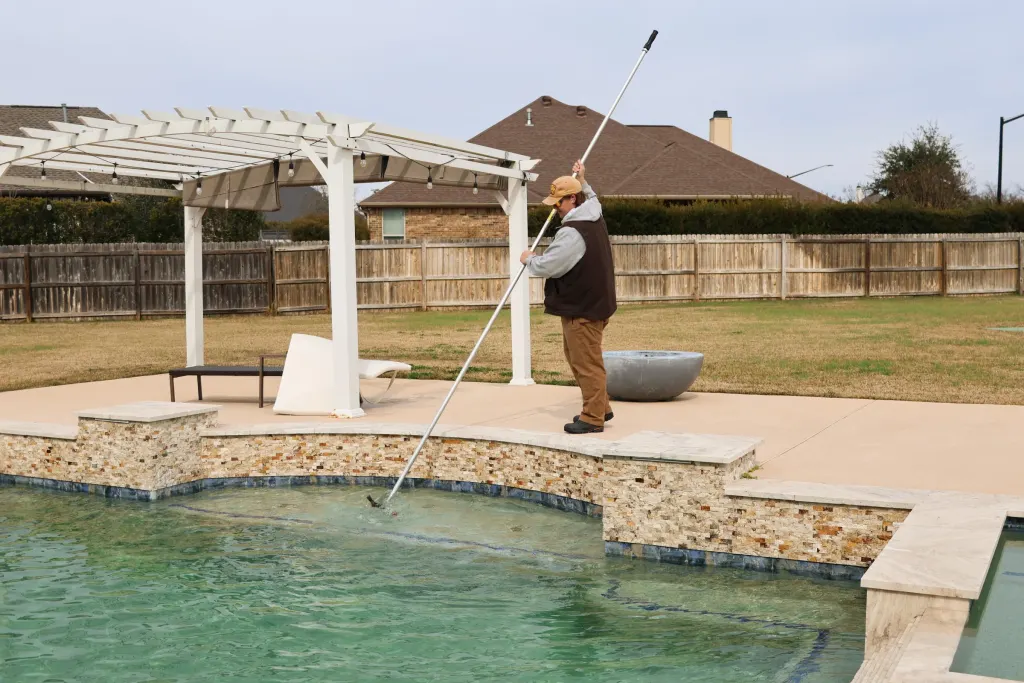
How a Green Pool Starts Destroying Your System
A green pool is not just “dirty.” It is a sign that the chemistry, circulation, and sanitation have been off for long enough that algae took over. Once algae blooms, it feeds on light and nutrients and spreads fast. The water ends up full of tiny living and dead particles, plus extra organic load from leaves, pollen, and dust.
When chemistry is off, you often see:
Low sanitizer, so algae and bacteria grow
pH out of range, so water becomes more aggressive or more likely to scale
High phosphates and organics, which act like food for algae
All of that puts stress on your equipment.
Pumps and plumbing feel it first. Thick, dirty water is harder to move. You can get:
Clogged pump baskets and impellers
Reduced flow that starves the pump of water
Cavitation and overheating as the pump struggles
The pump is built to move clean, balanced water, not sludge full of algae.
Then your filter takes the hit. Cartridge, DE, and sand filters all have a limit on how much they can hold. In a green pool, that limit comes fast. Filters can:
Plug up with algae and fine particles
Run at high pressure for long periods
Suffer internal wear and shorter filter media life
If that is not handled the right way, the inside parts of the filter can be damaged too.
Pool surfaces and structure are also at risk. When pH and other levels get far off, water can turn corrosive or scale-forming. That can lead to:
Stained plaster from algae, metals, or tannins
Etched or rough surfaces that are harder to clean
Damage to tile grout around the waterline
The longer the pool stays green, the deeper those stains and surface problems can go, and the harder they are to fix later.
What a Professional Green-to-Clean Service Really Does
A true green-to-clean recovery is more than dumping shock in the deep end and hoping for the best. A careful plan to clear a green pool protects both your water and your equipment.
When we clear a green pool, we usually start with an inspection. We look at:
Water clarity and color
Visible algae on walls, steps, and floors
Pump and filter condition, basket status, and pressure readings
Any safety concerns around the pool and equipment pad
Then we test the water. pH, alkalinity, calcium hardness, stabilizer, and sanitizer all matter. The mix tells us what kind of treatment your pool needs so we do not make chemistry swings that could hurt surfaces or equipment.
From there, a typical cleanup includes:
A targeted chemical plan to kill algae and restore balance without shocking the system too hard
Heavy brushing of walls, steps, and corners so algae cannot cling and hide
Vacuuming, often to waste when needed, so the worst debris goes straight out instead of clogging the filter
Filter cleaning or backwashing in stages, watching pressure as the system clears
During this time, we also keep an eye on the equipment. We check:
Pump baskets and skimmer baskets for repeat clogging
Filter pressure to spot stuck or broken parts
Visible leaks, air bubbles, or odd sounds that hint at early problems
That is where professional service really stands apart from a DIY approach. We understand how to sequence chemicals, how long to run the system, and what small changes in sound or pressure can mean. That helps prevent extra damage while we clear a green pool and get it back to swim-ready.